Three Name Plates, Twelve Days, One Straight Wall
I am writing this down mostly for my sister, who moves into her own flat next month and has sent me, at last count, twenty-three photos of name plates, all after midnight. But also for myself, because the plate by my front door took three attempts over twelve days and taught me more about my house than the man who sold me the house did. She was really asking for entryway name plates ideas, though neither of us called them that.
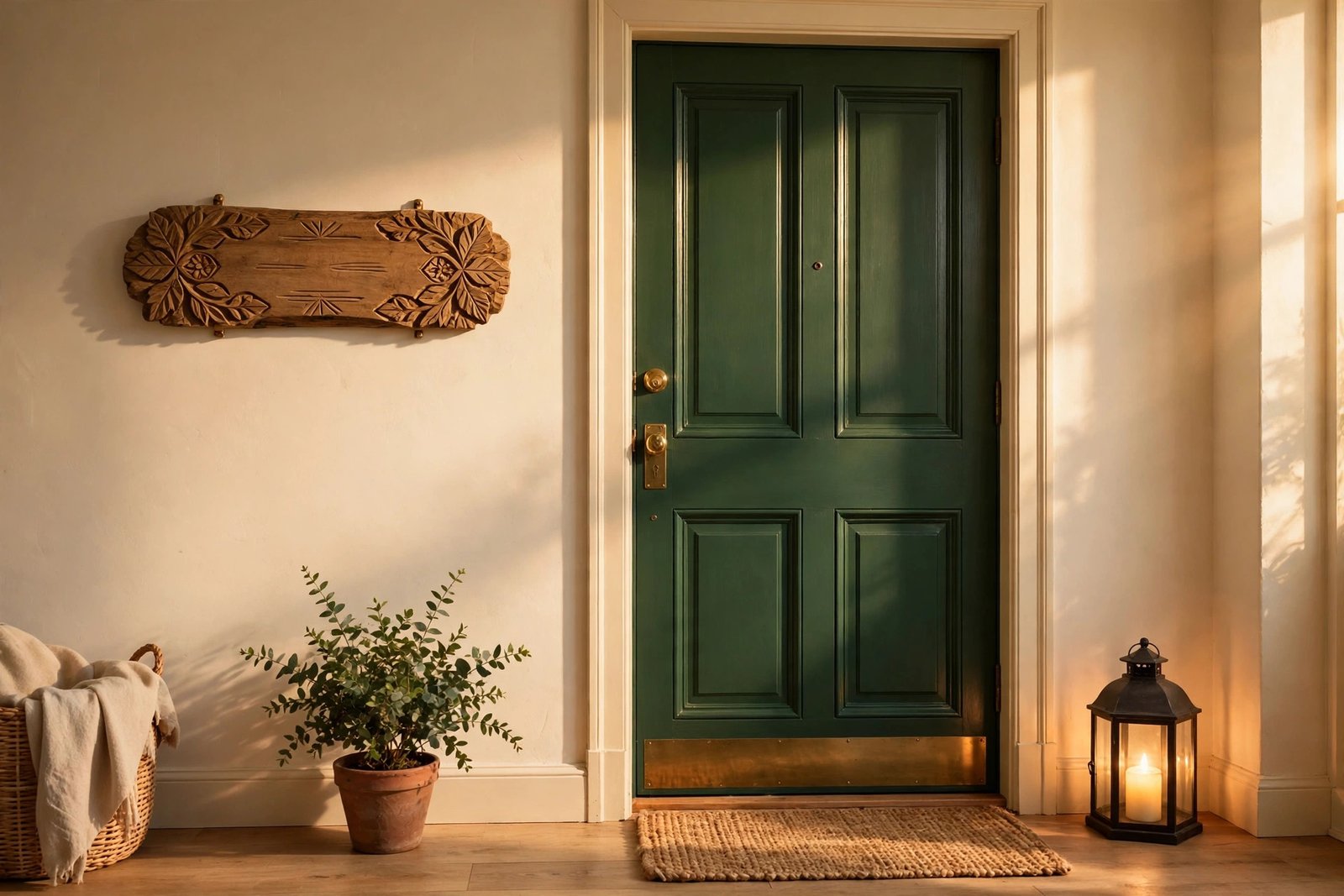
Day one, a Tuesday, late. My mother was coming on Friday. That is the entire reason this story exists. I wanted the door to look like a sensible person lived behind it, so at about eleven at night I ordered the first plate that came up on my phone — carved wood, our name, a little leaf in the corner, the leaf was extra. Twelve dollars, plus delivery, which annoyed me, but whatever. It said delivery in four days. Friday. Perfect, I thought, and went to sleep feeling organised, which should have been my first warning. Ordering at eleven at night was the first of many lessons in entryway name plates ideas that I learned the hard way.
Friday, 4 p.m. The plate arrived at the exact moment the taxi with my mother in it turned into our street. I am not exaggerating for effect; the courier called me from the gate while I could see the taxi’s roof over the wall. So I did what any calm person would do. I ripped the packet open — with my teeth, one corner of it, there were no scissors, there are never scissors — held the plate against the wall by the door, stood on my toes, and hammered the nail in by eye. No level, no pencil mark, nothing. Ninety seconds, tops. Then I ran to open the gate with the hammer still in my hand. A plate arriving with the taxi was pure luck, and luck is not a plan for entryway name plates ideas.
My mother got out of the taxi, looked at the door, looked at me holding a hammer, and read my name out loud — slowly, tilting her head, because the plate tilted. “Beta,” she said, “is the house sinking, or only the name?” She laughed the whole way up the steps. The plate stayed up for eleven days. I told myself nobody notices a crooked name plate. The courier boy noticed. He read it with his head cocked like a dog hearing a whistle. A neighbour I barely speak to noticed and straightened it with two fingers, without asking, the way you fix a stranger’s collar. That was the day it came down. My mother reading my name out loud was the moment entryway name plates ideas stopped being a shopping list and became personal.
Entryway Name Plates Ideas: Buying the Second Plate From a Real Person
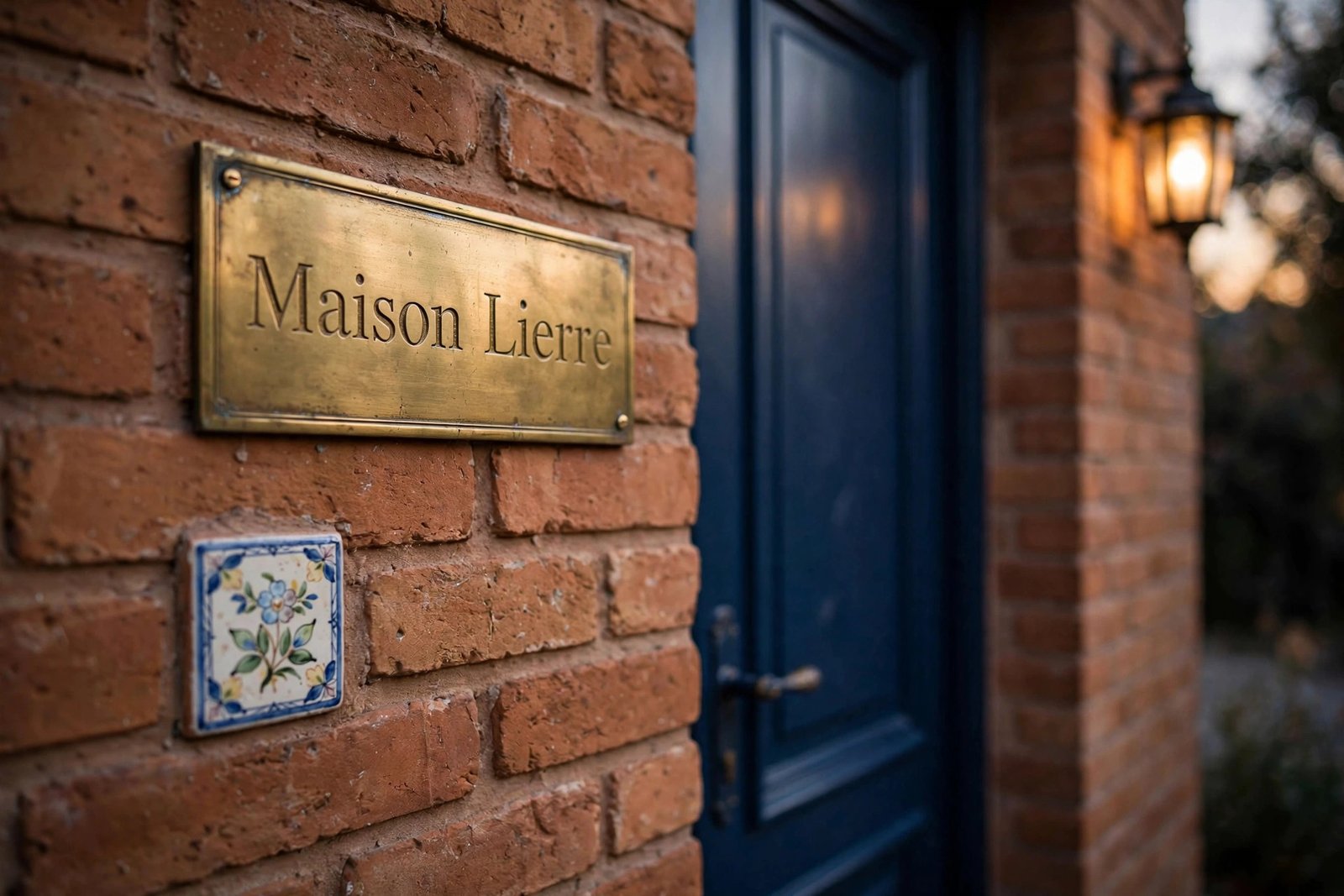
The weekend. I went to the old market to buy a plate from a human being this time, and found a small shop where a man named Saleem sahab paints ceramic tiles — blue and white, names, little birds, house numbers. The tile cost me 1,450 rupees and I haggled, badly, down from 1,600, mostly so I could tell my wife I haggled. He painted ours while I drank the tea he insisted on — two cups, he does not accept one — and as he wrapped it in newspaper he said the sentence I should have tattooed somewhere: “Hang it where the door cannot hit it, and not where the rain stands.” I nodded the nod of a man who understood everything. I understood nothing. Buying from a real person in the old market changed how I think about entryway name plates ideas altogether.
Here is what I had never once thought about: our front wall takes the full rain. No porch, no roof edge, nothing between that wall and the sky. And our door, when the evening wind catches it, swings outward in a wide, cheerful arc. Saleem sahab had named my two problems in one breath and I had nodded through both. A wall with no porch and full rain is the hardest test for entryway name plates ideas, and ours failed it first.
About a month later — I am skipping ahead, this is the honest part. The damp got in behind the tile first, a dark line along the grout that I pretended was a shadow for two weeks. Then one windy evening the door swung, kissed the corner of the tile — just a kiss, a chip the size of a fingernail — and my wife said, very quietly, “Saleem sahab told you.” He had. He had told me in the shop. Damp behind the tile was the honest part of the story, and it is why entryway name plates ideas must start with the wall, not the shop.
Which Material Survives a Rainy, Exposed Wall
Ceramic is still, to my eye, the warmest and prettiest option there is, and if your wall is sheltered and your door behaves, buy it and buy one spare tile the same day, because in five years you will not find that blue again. But a rainy exposed wall wants metal or stone and does not care about your feelings. Brass goes slowly dark and most people end up preferring it dark; steel ignores weather completely; wood survives only if you love it a little — one coat of varnish before the rains, every year. My neighbour Uncle Rashid has a teak plate older than his son, and the son is nineteen, and the plate looks better than the son’s motorbike. Sheltered wall: choose what you love. Exposed wall: choose what lasts. That is the whole materials lecture, learned at the cost of one chipped tile. The tile, by the way, is not wasted. It lives inside now, in the hallway, where blessings and quotes and personal things belong — the outside wall is for names, not for phone numbers and full addresses and everything a stranger does not need to read from the street. That material choice is the first of our entryway name plates ideas worth checking before you buy. Ceramic still looks warmest to my eye, which is why material always comes first.
Paper First: The Template Trick
Day one of the third plate. A Saturday. Plain wood this time. Family name only. No leaf. I had learned restraint, at some cost. But before the drill came out, I did the thing I now preach at anyone who will stand still: I cut a piece of the brown packing paper the plate came in, exactly its size, and taped it to the wall. Plain wood, family name only, no leaf — that restraint is the best of the entryway name plates ideas I picked up over twelve days.
Then I lived with a piece of paper for two days. My wife asked if we were decorating or studying for an exam. Fair question.
Sunday morning. The paper was too high. I had measured from the ground like a fool, but nobody stands on the ground at our door — they stand on the raised step, and their eyes sit a good fifteen centimetres higher than I had assumed. A visitor’s eye lands around 150 to 165 centimetres above wherever their feet are. I moved the paper down and felt cleverer than the drilling had ever made me feel.
Sunday evening. The bulb over our door threw the paper into shadow by six o’clock. So the plate would have been invisible after dark, and a name plate does half its work at night — the guests who arrive for dinner, the courier at dusk. A solar lantern went up beside the door that same evening — 850 rupees, one screw, done — it cost less than the pizza we ordered to celebrate it, and honestly the lantern changed the entry more than the plate did. Warm light, a plant at the base of the wall, a doormat that gets washed — a plate alone on a bare wall looks like an afterthought, but give it those two cheap companions and the whole doorway looks intended. The seasons can do what they like around it — a wreath in winter, a garland, lights — the plate just sits there being the anchor. That is its job.
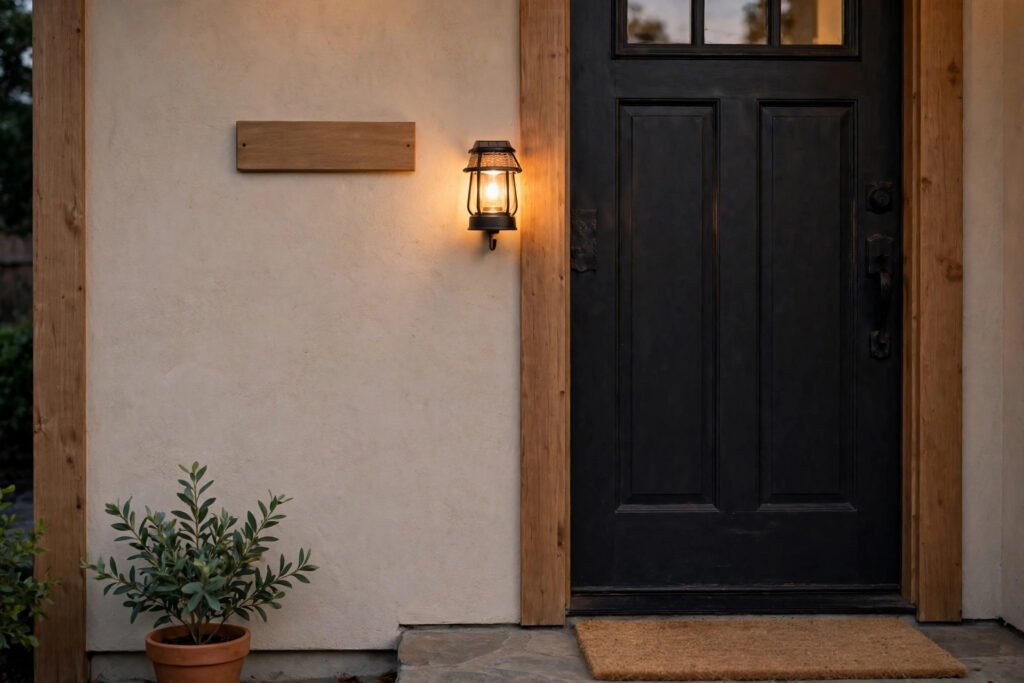
Monday. I stood at the gate and read the paper from the street, the way a stranger would. This is the test nobody does. For a house, the name should be readable from three or four metres — letters five to seven centimetres tall, a board roughly 30 to 45 centimetres wide. For my sister’s corridor flat, where the furthest reader stands an arm’s length away, 20 to 25 centimetres is plenty and anything bigger would shout. Same family, two completely different plates. The paper tells you which house you live in before the money does.
Advice for My Sister, and for Bilal
That night, the phone calls. My sister, midnight, photo number twenty-four: an acrylic plate, very thin, very cheap. I told her what I tell everyone renting — acrylic is genuinely the renter’s friend, it goes up on adhesive strips and comes down without leaving a mark for the landlord to find, but buy the thicker frosted kind, because the thinnest sheets yellow in strong sun within a year and end up looking like they have a habit. And my cousin Bilal called to laugh at me, which was rich, because Bilal once fixed individual brass letters straight onto his wall, drilled first and measured later, and his name ran uphill for a year until his wife made him redo it. Metal letters are the smartest-looking option for a flat or a modern house and the least forgiving thing in this entire story: one letter three millimetres out and the word looks drunk. Paper template, step back, step back again, then drill. Paper first. It is always paper first.
Sana, my wife’s friend, has the best plate I know and it never involved a shop at all — a board she sanded and painted her door’s colour on a Sunday, lettered by hand, the letters slightly uneven. Every guest asks where she bought it. Handmade and slightly imperfect beats shop-perfect, every time, because it looks like a person lives there. If you are newly moved in or newly married, though, wait a month before ordering anything permanent at all: in a month you learn which side of the wall the rain attacks, where the light falls at six, and whether the postman can find you. I learned all three the expensive way so that my sister, and now you, can learn them the cheap way.
Drilling Day: Straight on the First Try
Tuesday, four minutes. Two holes, straight ones, drilled where the paper had been. The drill is Uncle Rashid’s, by the way. It has been “borrowed” for a year. He knows. He pretends not to, the way I pretend not to notice him straightening things. The plate went up level on the first try, at the height where a standing visitor’s eye actually lands. Ten minutes once a year is all it asks from here — wipe it, tighten the screws, varnish or polish before small tiredness becomes damage.
My mother visited again last week. She stood at the gate a moment, read the name straight, smiled, and knocked like a guest at a house she approved of. “Now,” she said, “the house is standing up properly.” Three plates, twelve days of actual work spread over one expensive month, and a piece of brown paper did more than all of them. If you take one thing from my sister’s midnight education, take that: paper first. Those are the simplest entryway name plates ideas to start with. For more background, see this guide to nameplates.
Decorating a small flat instead? Read: One Room, One Tree on the Wall, and No Door Blocked