For christmas decorating ideas that actually work in a real home, let me tell you about last December first. Because otherwise this list will sound like one of those perfect lists, and it is not.
It is nine at night. Maybe nine fifteen. I am in our living room holding a fairy light string and it is tangled — I mean properly tangled, the kind where you pull one end and the other end gets worse. Ammi calls from the kitchen. “Beta, bas kar do.” She says it is enough. Mahnoor, my younger sister, is on the floor. She has two piles of gold baubles in front of her. Shiny ones. Chipped ones. She is very serious about this job, which is funny because it is baubles.
We bought nothing new that night. We just moved things. And by eleven the room looked warm. Not perfect. Warm. That is the difference, I think. So here are six ways. The ones we actually use. With prices, because cousins keep asking on WhatsApp. “Yaar ye lights kitne ki lein?” So, fine. Here are the prices. That night turned into one of our favourite christmas decorating ideas in practice, simple and warm rather than showy.
1. The Tree: Gold and Warm
First way. The tree. Gold. Warm. Done. This is where our christmas decorating ideas always start, with light before anything else.
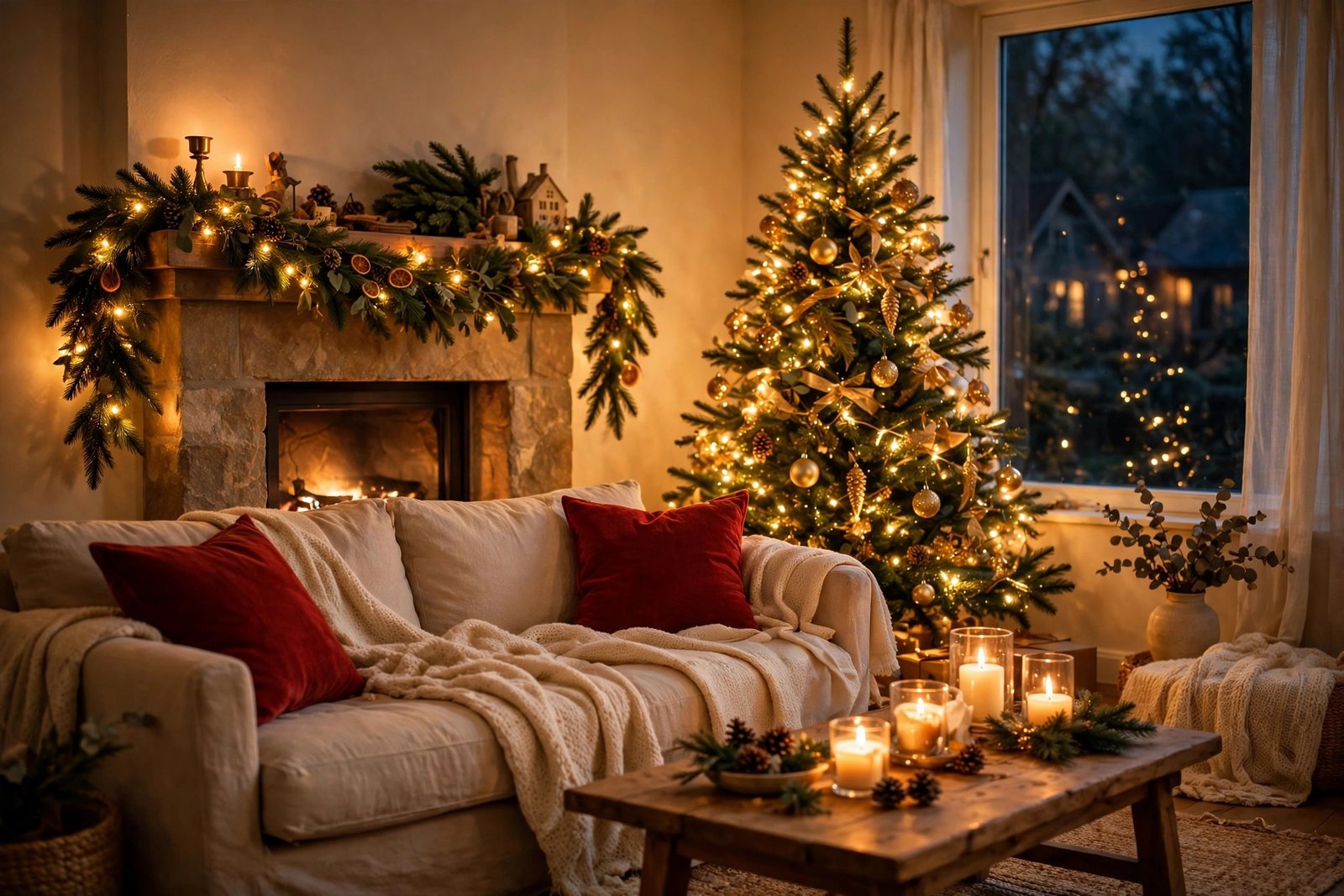
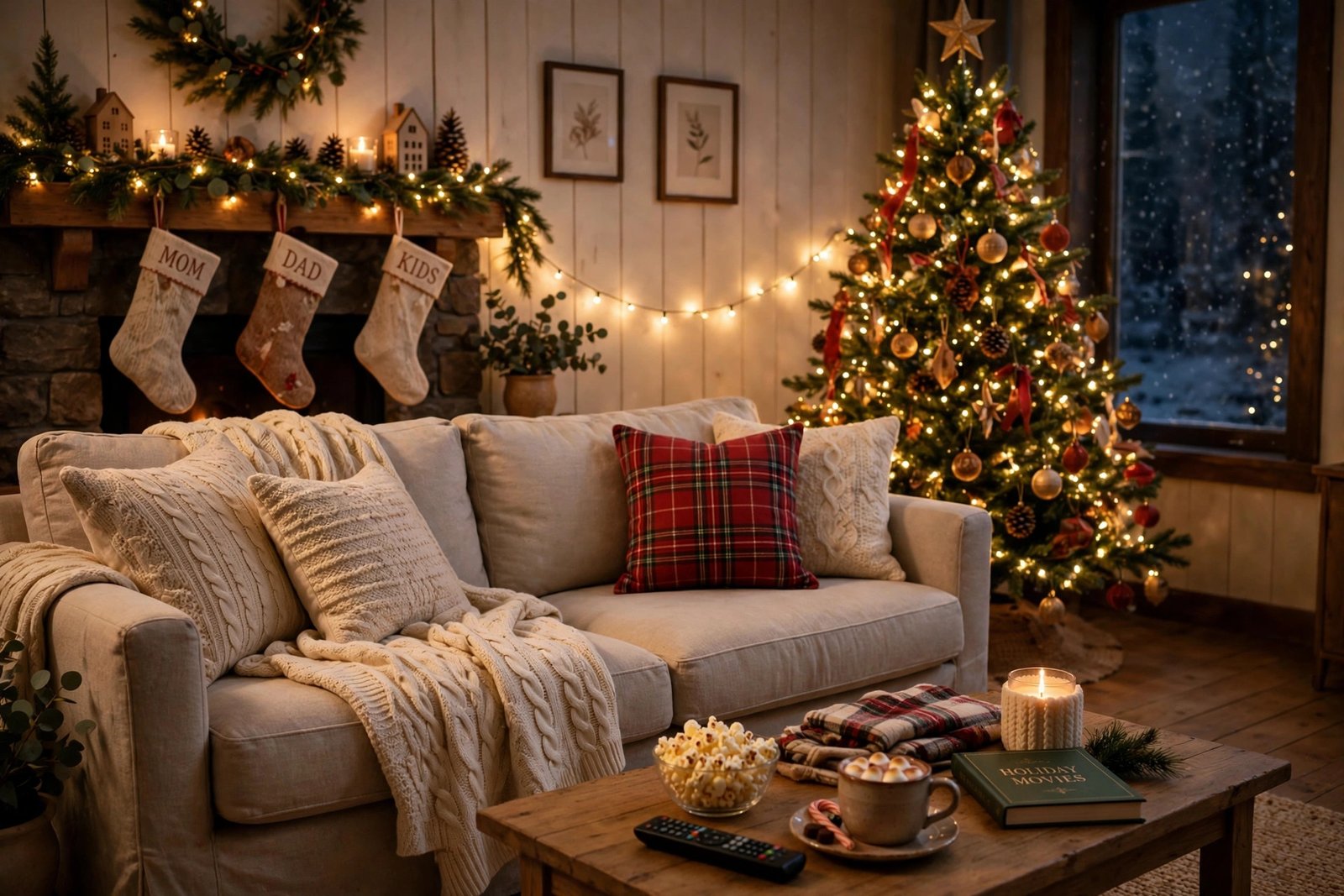
Our tree is small. Artificial. Abba bought it four years ago and it leans left. Always left. I have tried fixing it, Mahnoor has tried, it still leans. We put it in the corner by the window. Not the middle of the room. The middle is for the sofa. And for whoever collapses on the sofa after dinner, which is usually Abba.
Rule number one for us now: warm white lights first. Then gold ornaments. Only gold. Last year Mahnoor said, “Let’s add red and blue too, it will look fun.” It did not look fun. For one whole evening our tree looked like a traffic signal. We took the red and blue off. Gold on green, warm light behind it — that glows. It does not shout at you.
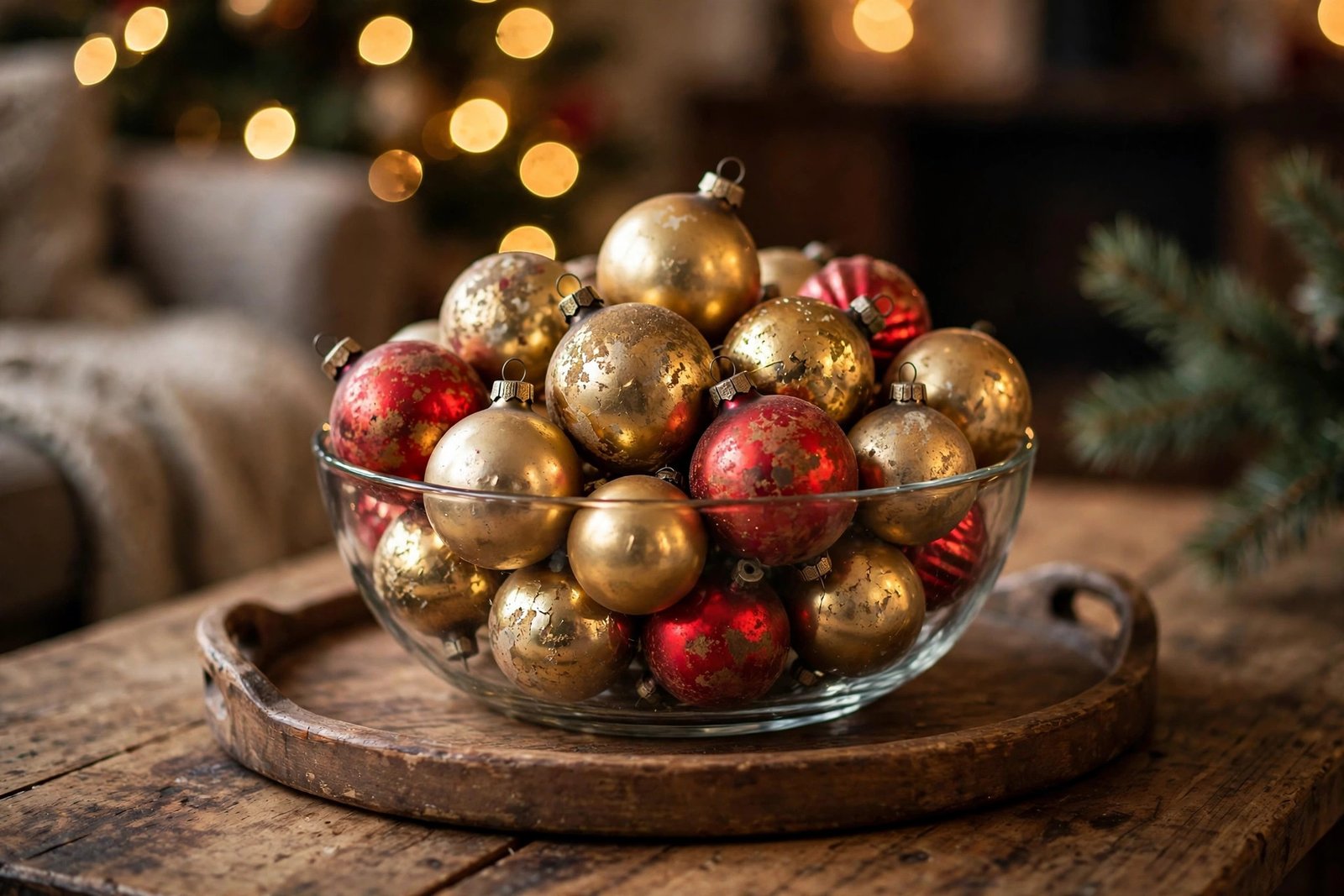
How much? Lights: Rs 450. Hundred bulbs, warm white, Sunday bazaar. I remember because the shopkeeper tried to charge Rs 550 and Abba bargained him down. Gold baubles: Rs 850, twelve pieces, mixed sizes. The star on top is bent. Slightly. Nobody fixes it. Abba says it is tradition now. I think he is joking. But we leave it.
Oh, and wrap the lights from the inside out. Not top down. I am telling you this because we did top down once and the bottom branches stayed dark. Mahnoor looked at it and said the tree looked bald at the bottom. She was not wrong.
2. The Pine Garland on the Mantel
Second way. Pine garland on the mantel. And let it droop, please. Among all our christmas decorating ideas, this drooping garland is the one guests always ask about first.
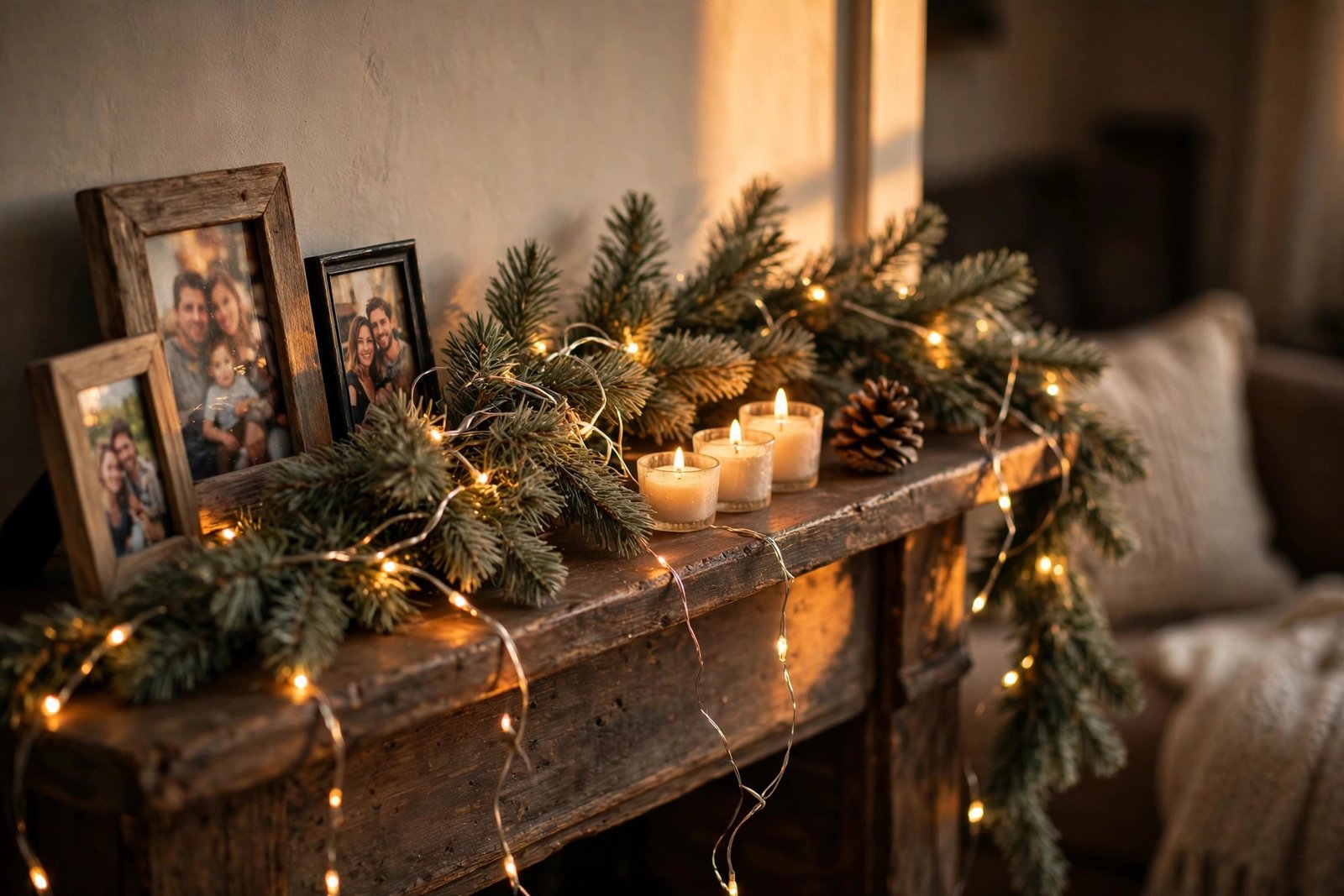
We do not have a real fireplace. We have a shelf. A mantel shelf. The rest of the year it has photo frames on it. In December the frames go to the side table — Ammi moves them herself, very carefully — and a pine garland goes up. And suddenly the room smells like winter. Faintly. Even though the garland is fake. How does that work? I have no idea. But it does.
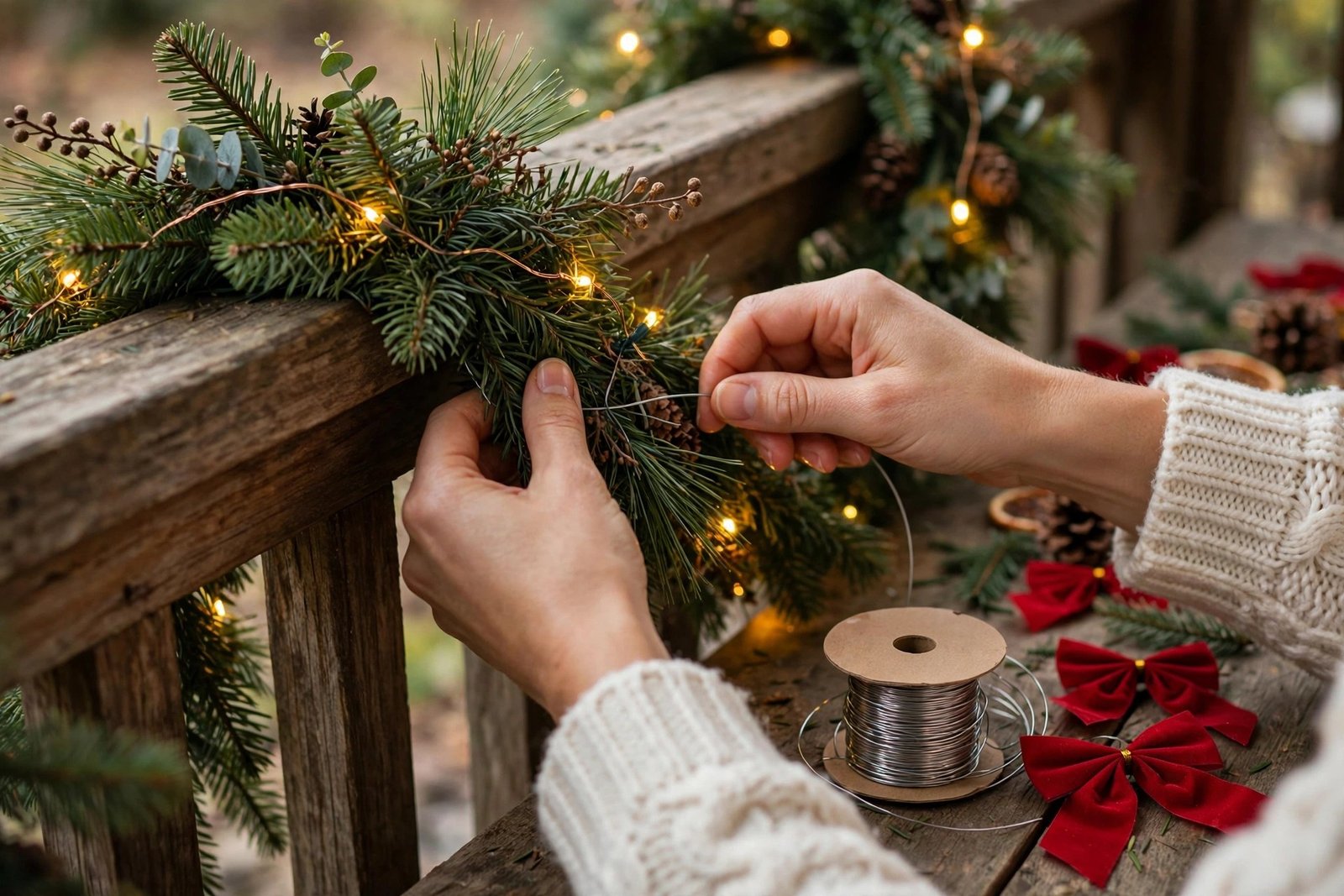
Garland: Rs 1,200, two metres. Lights woven through it: Rs 350, fifty bulbs, same warm white. Do not pull it tight. This is important. Let the middle sag down a bit. Let the ends hang on both sides. If it is too straight it looks like a shop. If it droops it looks like a home. Like someone lives there. Which, you know, someone does.
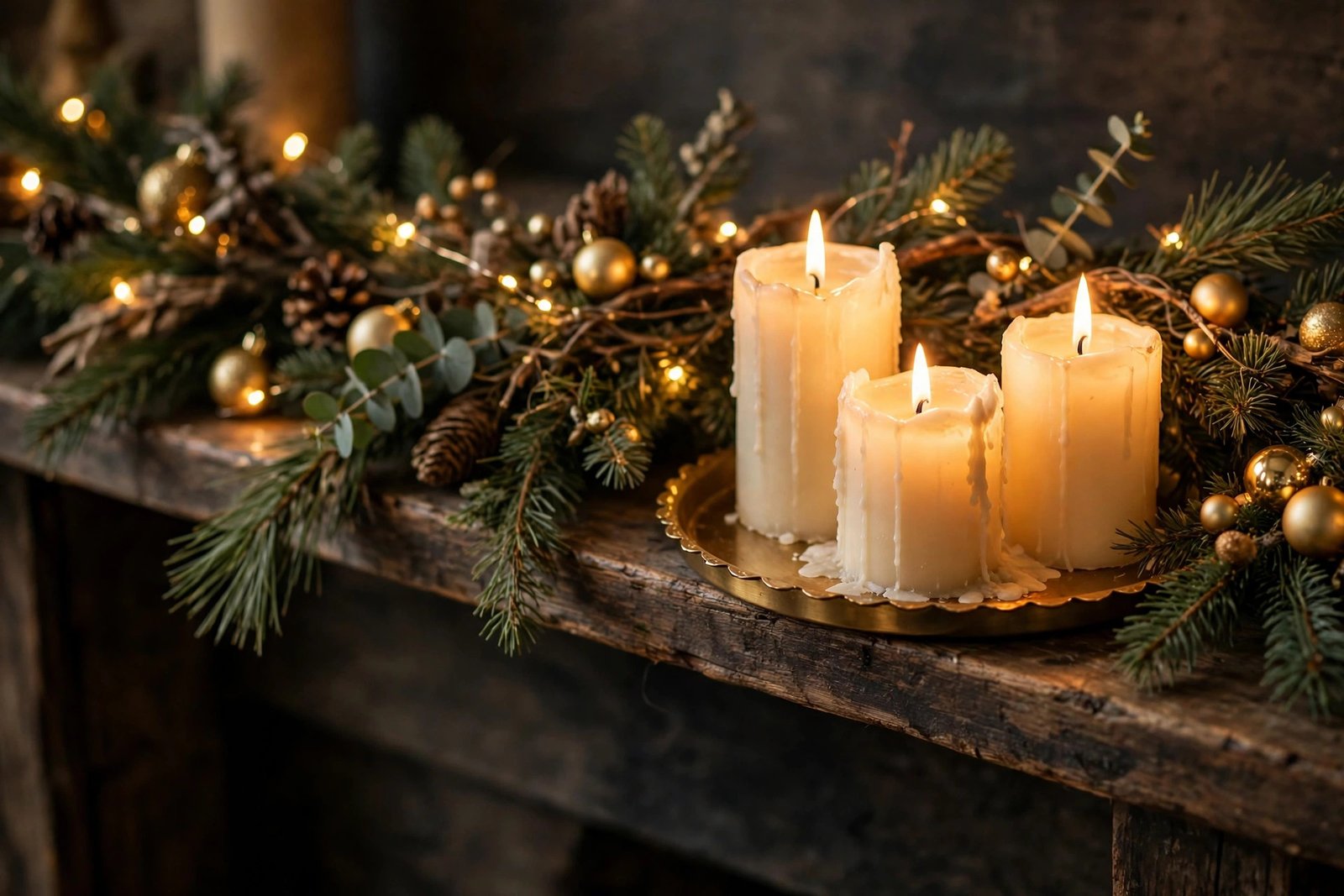
Ammi puts three small candles on the mantel too. And one pine cone. Where did she get the pine cone? She will not tell me. She just smiles. Every year I ask, every year she smiles. Fine. Keep your pine cone secrets, Ammi.
Last year the garland fell off. Midnight. Left side. Landed right on the photo frames. We found it in the morning, lying across Ammi’s favourite frame. Was anyone angry? No. We hooked it back up with two small nails. Those nails are still there now, all year, hiding behind the frames. That is what a real house looks like, I think. Nails behind frames.
3. Candles on the Coffee Table
Third way. Candles on the coffee table. But in the middle. Not the edge. Never the edge. Of all our christmas decorating ideas, this candle tray is the easiest one to copy tonight.
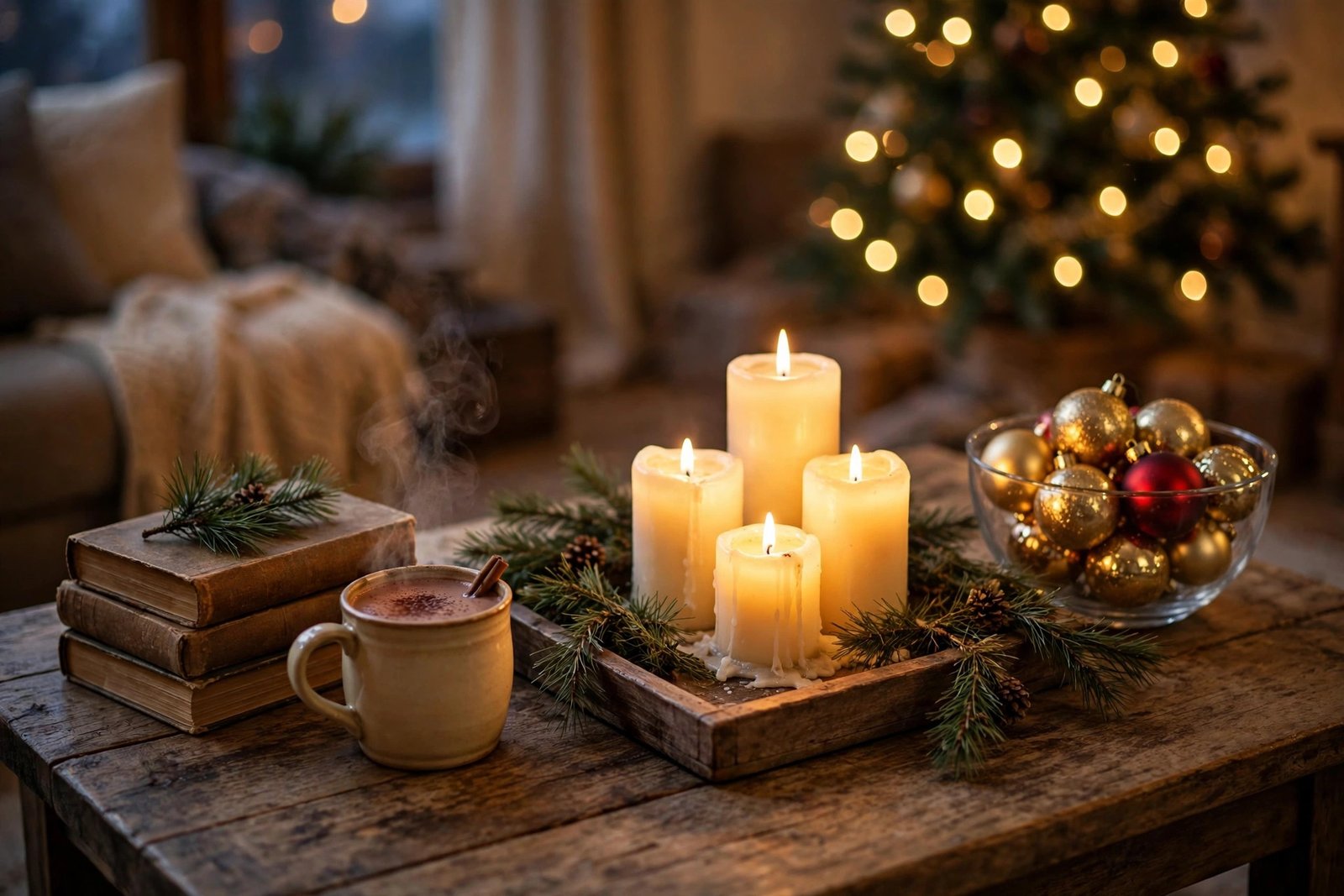
This is the cheapest thing here. And also the thing Ammi worries about most. Why? Two years ago my cousin’s little boy — he is maybe five — nearly knocked a candle onto the rug. Since then, rules. Tray in the middle of the table. Candles on the tray. Nobody moves them. We only light them when someone is sitting in the room. That is the rule and Ammi enforces it like a general.
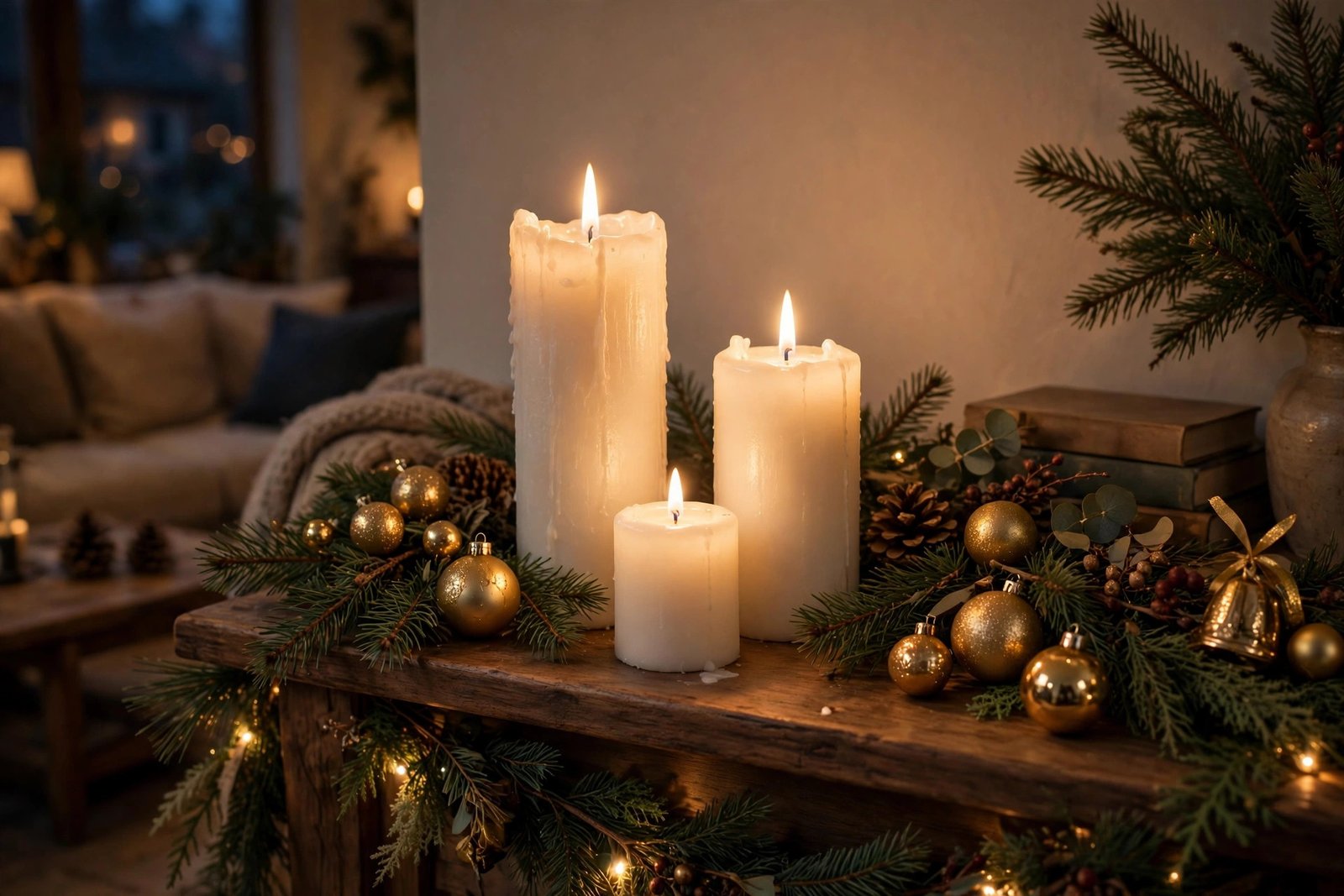
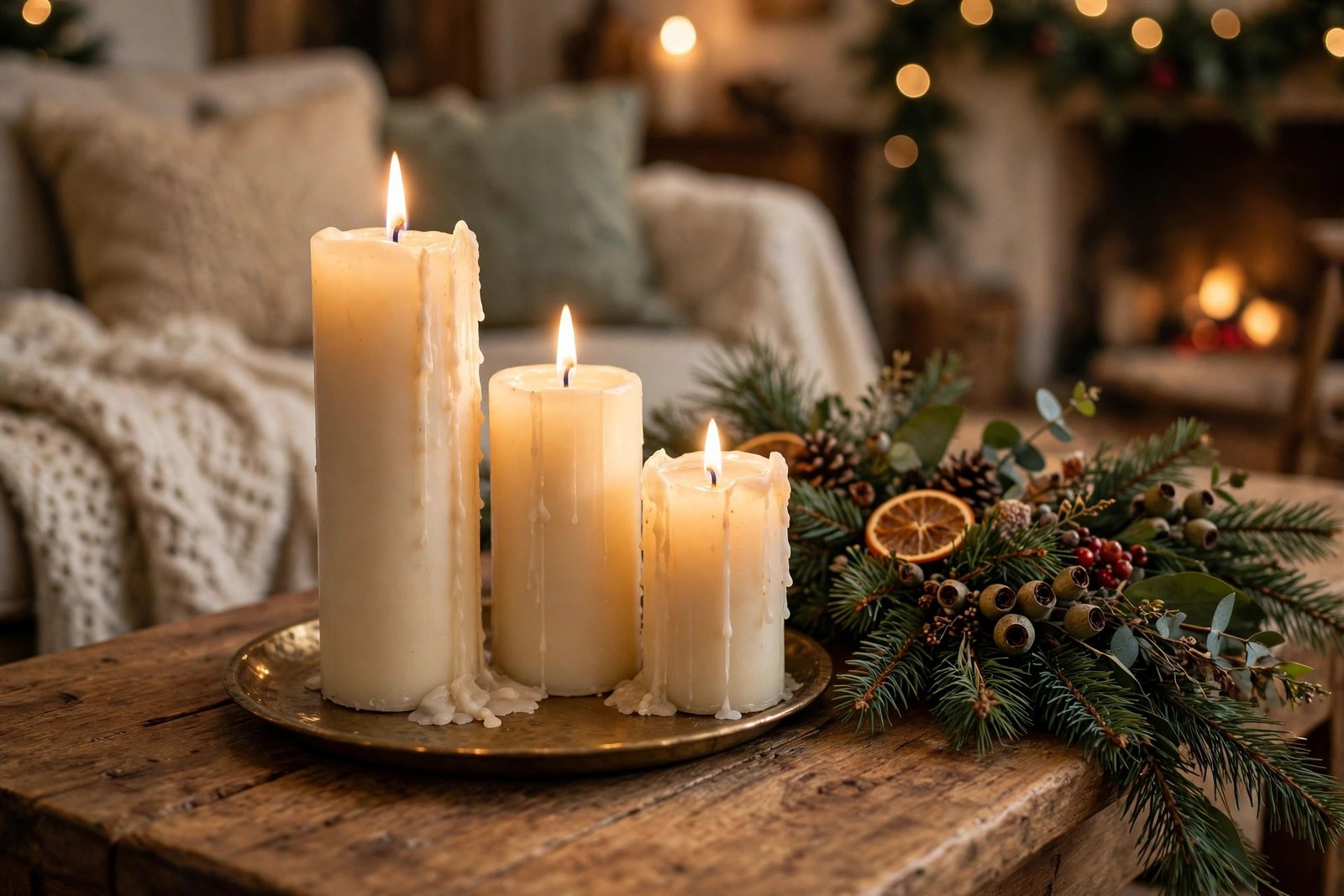
Tray: Rs 600. It was on sale. Candles: three pillar candles, cream colour, Rs 300 for the set. Around them we put pine cones and one dried orange slice. Mahnoor makes the orange slices. She cuts oranges thin and puts them near the heater. They look expensive. They are not. They are oranges.
Night time. Main light off. Candles on. Tree lights on. The whole room changes. The walls go gold. My father sits there reading his newspaper and he says the print looks softer in this light. Is that true? Scientifically? No. But I understand him. I really do. This glow is why these christmas decorating ideas feel so much bigger than the money spent on them.
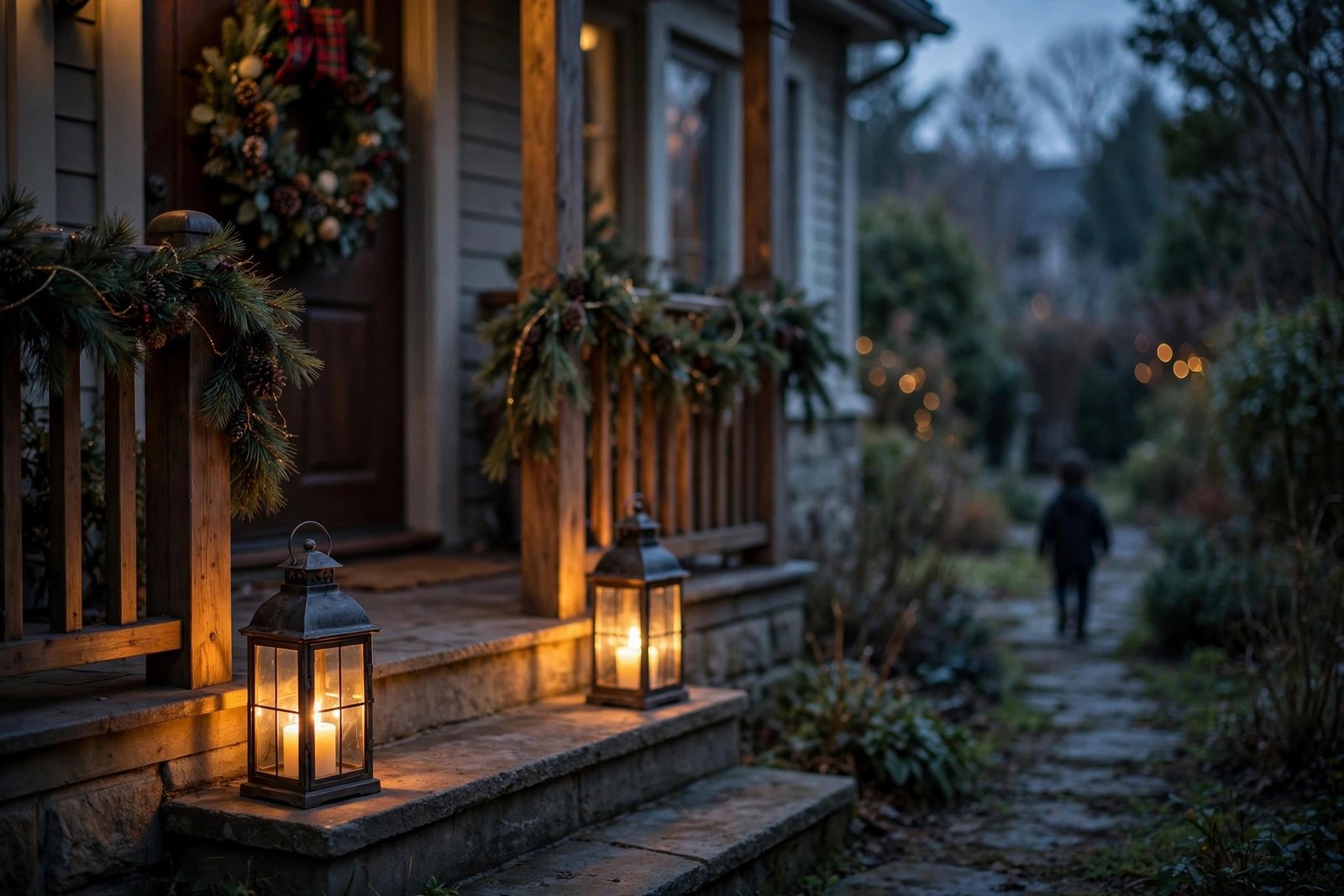
One warning though. Do not put candles under the mantel garland. Or under anything hanging, actually. We did that once. The heat made the garland droop even more — I mean really droop — and Ammi banned candles from that corner. Forever. Her word was “forever.” Fair. For candle safety, I always check the fire service guidance before we light anything near greenery.
4. Cushions and a Good Throw
Fourth way. Do not buy a new sofa. Just dress the one you have. Cushions. One throw. Simple christmas decorating ideas like this change how a room feels without changing the furniture.
People skip this one and I do not get why. Because guests touch the sofa. They do not touch the garland. They sit on the sofa. Our sofa is beige. Plain beige. Older than Mahnoor’s school life, I am pretty sure. Every December we dress it up. That is it. That is the whole trick.
Two red cushions. Rs 650 each. One cream knitted cushion — Ammi already had that one, so free. One soft throw, off-white, Rs 1,400. Four minutes. That is how long it takes. Mahnoor folds the throw over the arm of the sofa. Not across the back. Across the back it slides off the second someone sits down. On the arm it stays. And it looks deliberate. Like you planned it. Which, well, Mahnoor did plan it.
Now the throw is the most fought-over thing in our house in winter. Whoever sits first grabs it. Wraps it around themselves. Ammi says, “Ye sab ke liye hai, ek banday ke liye nahi.” It is for everyone, not one person. Then she goes and brings a second blanket from the bedroom for guests anyway, because she does not trust us to share. She is right not to trust us, to be honest.
If you buy one thing from this list — one thing — buy the throw. A room with a throw on the sofa feels lived in. Without it, the room just looks clean. There is a difference.
5. A Glowing Dining Table
Fifth way. The dining table. Make it glow, even on a normal Tuesday. These christmas decorating ideas work best when the table is kept simple and warm.
Most meals we eat in the kitchen. That is normal. But in December the dining table wakes up again, because we put a centrepiece on it. And then we actually want to sit there. Funny how that works.
Our centrepiece: a long wooden board. Three small candles in a row. Some pine branches — cut from the leftover garland, so free. Two gold baubles that did not fit on the tree. Extra cost? Almost nothing. The board was Rs 500 from a wood shop near our street. It stays on the table all month.
But listen. First year we did this, we made a mistake. Candles too close to the pine branches. One branch curled at the edge from the heat. We did not notice until dinner. Abba pointed at it. “Ye jal gaya hai?” Did it burn? No. It just curled. But we learned. Candles in the middle. Greenery at the ends. Never touching. That is the rule now, written nowhere, remembered by everyone.
Mahnoor sets the table every Sunday evening in December. She uses the good plates. Not the daily ones. Even when it is just us. I asked her why once. She said the table deserves it. And you know what? She is right. A glowing table makes a normal daal dinner feel like an occasion. In a long winter, that matters more than people think.

6. Light the Hallway and the Doorway
Sixth way. The hallway. And the door. Light them first. Good christmas decorating ideas start at the door, before anyone even reaches the tree.
Three years ago I would have skipped this. Now? I think it is the most important one. Think about it. Someone comes to your house in December. First they walk through your hallway. If the hallway is dark, the living room feels like a surprise. Not a welcome. A surprise. I want a welcome.
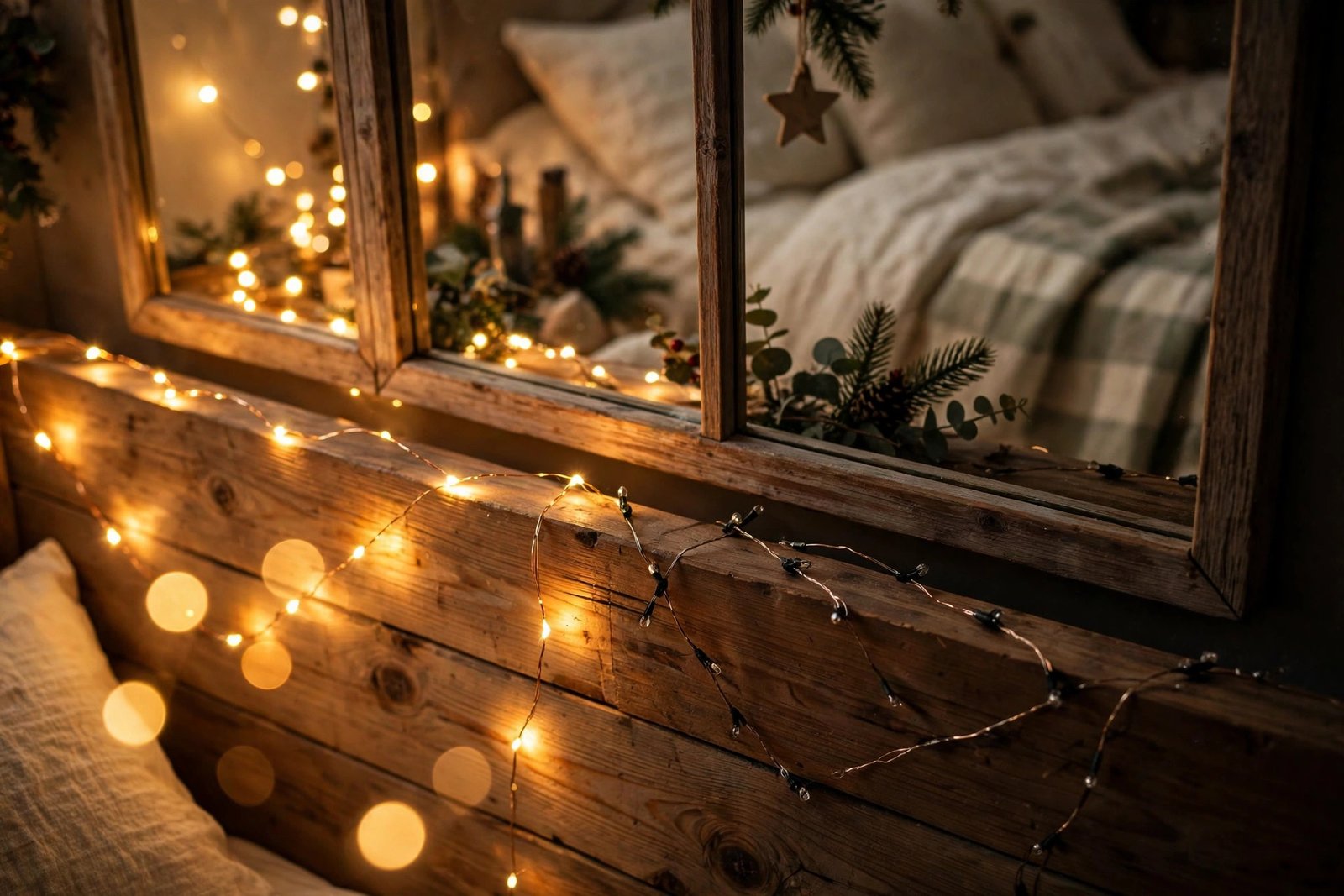
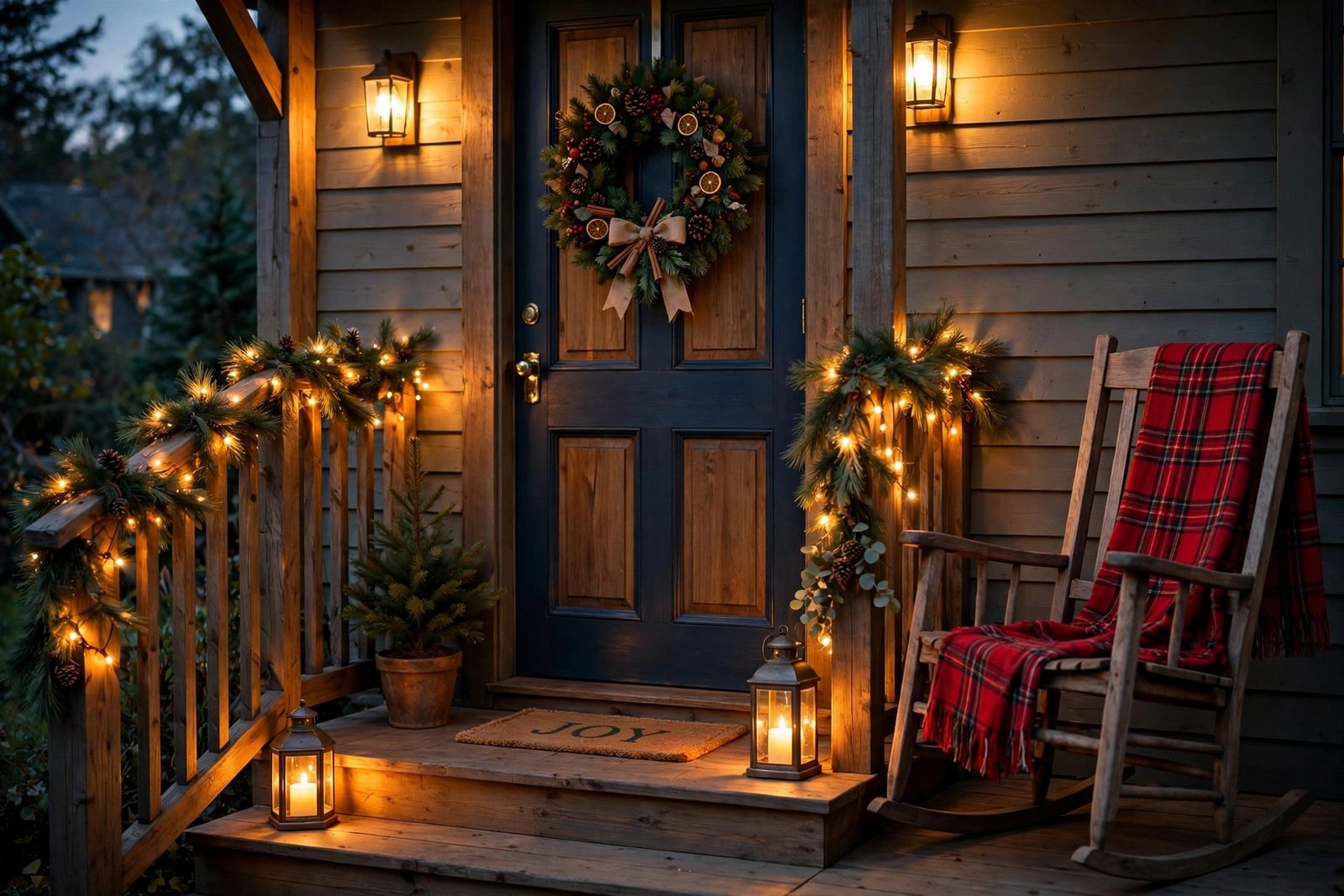
So: one small warm light in the hallway. A plug-in fairy light bottle. Rs 700. And a wreath on the front door. Rs 900. Artificial pine, small red bow. The wreath is the first thing visitors see. Last year our neighbour Aunty Razia knocked on our door just to ask where we bought it. Ammi told her the shop. Now Aunty Razia has the same wreath. We pretend we do not notice. We notice.
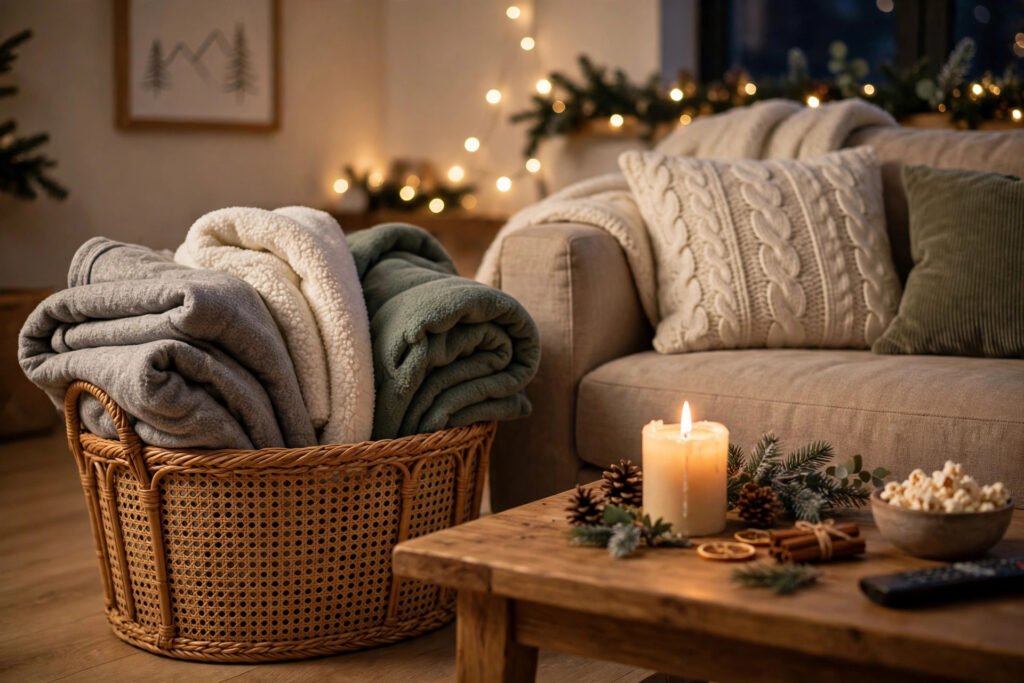
In the hallway we also keep a small basket with extra blankets. For guests. Because December guests always say “I am fine” and then shiver quietly. You have seen this. I have seen this. The basket was free — it was already in the storeroom, doing nothing. Now it does something.
The hallway light stays on until everyone sleeps. Then you walk from the hallway into the living room. Tree on one side. Candles on the table. And the whole house feels like one warm place. Not separate rooms. One place. That is the real trick, I think. Do not decorate one room perfectly. Light the path between the rooms. Then the whole house glows.
So. One rule, if I have to pick one. Warm light first. Everything else second. Buy the warm white lights before you buy anything shiny. Candles in the middle of the table, never near the greenery. Let the garland droop. That simple rule keeps our christmas decorating ideas feeling calm instead of cluttered.
Total last year for the new stuff — lights, garland, baubles, candles, cushions, throw, wreath — around Rs 7,000. Two shopping trips. Most of it we reuse this year. The house did not turn into a magazine photo. It turned into our house. Mahnoor sorting baubles on the floor. Abba reading in candlelight. Ammi saying it is enough, long before it actually is. Looking back, these christmas decorating ideas cost far less than they look, because most of the warmth came from light and care.
Warm. A little bent. Ours. That is the kind of Christmas decoration I would wish for anyone.